
People rarely plan their trips around a country’s festival calendar. But witnessing a place through its festivals is another level of exploration. It is when you get to see its roots, beliefs and stories come alive, not just as something to read about, but something you can actually feel.
That is why festivals like this draw people from far beyond their own borders. They offer a rare chance to experience a country through the traditions and stories that have shaped it for generations.
Punakha Festival is exactly that.
Every February, Punakha Dzong fills with monks, families, locals and travellers as drums echo through the courtyard and centuries-old traditions unfold around you. It is colourful and lively, but beneath the spectacle is a deeper story of faith, conflict and the making of Bhutan.
In 2027, Punakha Festival takes place from 13 to 18 February, bringing together two celebrations that offer a closer look at Bhutan’s history and culture.
And perhaps that is what makes being here so special: for a few days, you are not simply visiting Bhutan. You are witnessing a part of what makes it Bhutan.
Punakha Festival 2027 at a Glance
When: 13–18 February 2027
Where: Punakha Dzong, Punakha, Bhutan
Duration: 6 days
Celebrations: Punakha Drubchen (13–15 February) and Punakha Tshechu (16–18 February)
What to expect: Historical re-enactments, masked Cham dances, religious rituals, traditional music and a large gathering of Bhutanese communities.
Why it matters: The festival brings together Bhutanese history, Buddhist traditions and community life in one of the country's most significant cultural settings.
Planning note: If you're travelling specifically for the festival, consider allowing time around the six festival days rather than treating Punakha as a single-day stop. The valley has enough cultural and natural depth to make the extra time worthwhile.
The Story Behind Punakha Festival

Long before Punakha became a destination on a Bhutan itinerary, it was a place at the centre of Bhutanese power, faith and identity. Punakha Dzong, built at the meeting point of the Mo Chhu and Pho Chhu rivers, became one of the most important seats of Bhutan's political and religious life. Today, its courtyards hold one of the country's most significant annual celebrations.
But the Punakha Festival isn't simply a celebration that appeared on the calendar centuries ago. Its roots lie in a period when Bhutan was still being shaped into a unified country, and when defending its territory and religious traditions could mean defending its very identity.
In the 17th century, Zhabdrung Ngawang Namgyal emerged as one of the defining figures in Bhutanese history. He is widely recognised as the unifier of Bhutan, bringing different regions together under a common political and spiritual authority. Punakha became particularly important during his time, eventually serving as the winter seat of the government and the monastic body.
It was against this backdrop that conflict with forces from Tibet reached Bhutan.
According to Bhutanese tradition, when Tibetan forces threatened Punakha, local men known as Pazaps were called upon to defend the valley. What followed became one of the stories preserved through the Punakha Drubchen: ordinary local men, rather than a conventional standing army, taking part in the defence of their homeland.
But there was something else at stake.
The invaders were believed to be seeking the Ranjung Kharsapani, a sacred relic associated with Avalokiteshvara. Its protection gave the conflict a significance that went beyond territory. The defence of Punakha became intertwined with the protection of something profoundly sacred to Bhutanese Buddhist tradition.
And this is where the festival's story becomes particularly fascinating.
The battle did not simply disappear into history. It became something Bhutan continued to remember through ritual and performance. The Pazaps return to the courtyard. Military movements are recreated. The sounds of battle are brought back into a place where generations of Bhutanese have gathered to remember what happened.
Punakha Drubchen: When History Comes Alive
Held from 13–15 February 2027, the Punakha Drubchen is the most dramatic chapter of the festival. Its centrepiece is the re-enactment of the battle in which Bhutanese Pazaps defended Punakha against Tibetan forces.
Inside the courtyard of Punakha Dzong, local men dress as the traditional warriors and recreate military movements, mock combat and moments from the historic confrontation. The atmosphere can feel surprisingly theatrical, but the meaning goes much deeper than the spectacle.
The Drubchen keeps the memory of that defence alive through performance rather than preservation behind glass. What you see is a tradition passed from one generation to another, allowing the story of Bhutan's defence to remain part of community life.
And because the celebration is rooted in a real episode from Bhutan's past, every drumbeat and movement carries context. You're not simply watching warriors perform—you are watching a community revisit a story that helped shape its national identity.
Punakha Tshechu: When Faith Takes Centre Stage
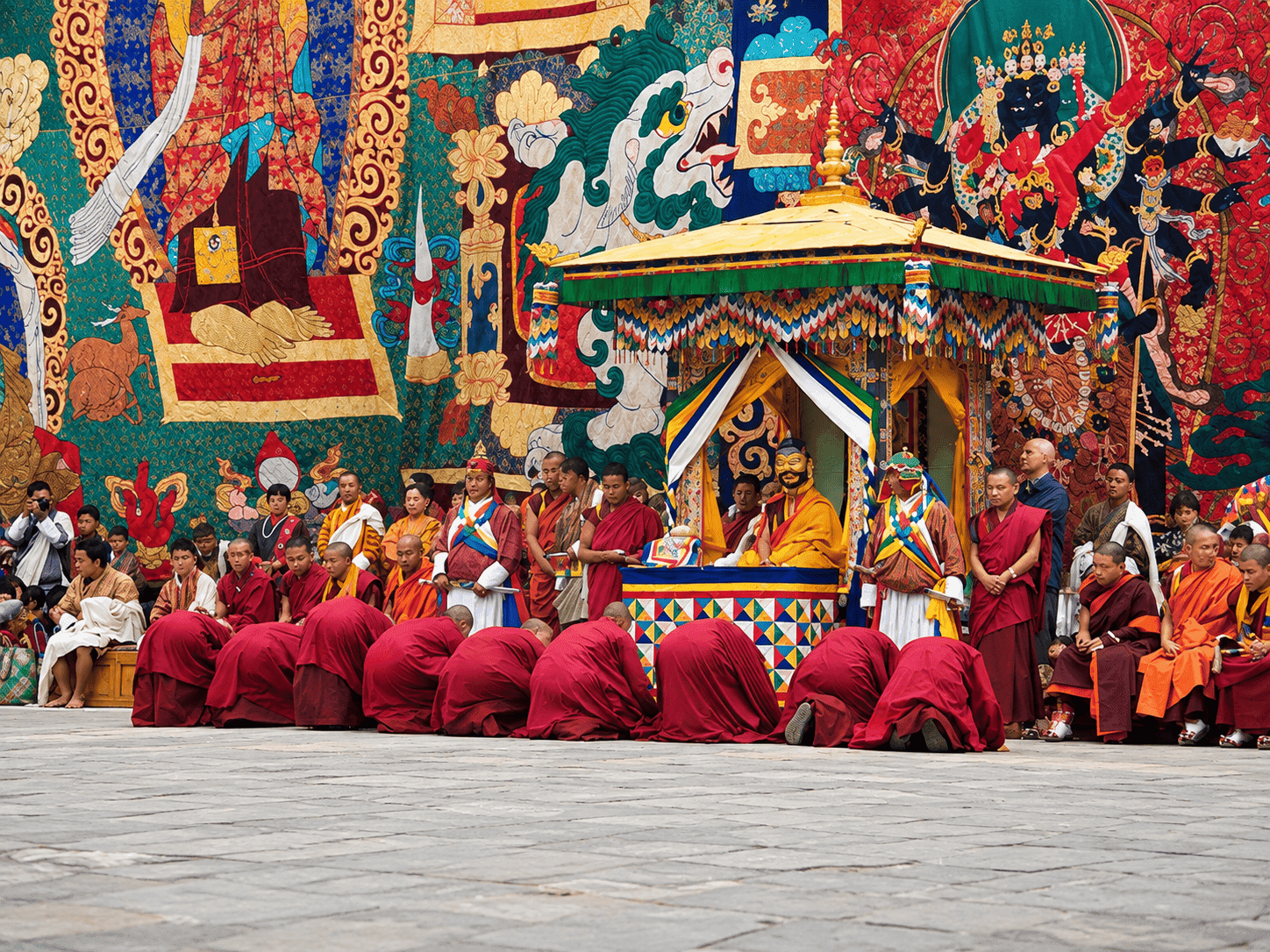
From 16–18 February 2027, the celebration moves into its religious chapter: the Punakha Tshechu.
Established in 1905 by the 25th Je Khenpo, the Tshechu was created to complement the historic Drubchen with religious ceremonies intended to bring blessings to the district.
The courtyard takes on a completely different rhythm. Monks appear in elaborate masks and costumes for Cham dances, highly choreographed sacred performances representing Buddhist deities, spiritual figures and the triumph of positive forces over negativity.
For Bhutanese devotees, these dances aren't simply something beautiful to watch. Witnessing sacred Cham is traditionally associated with spiritual merit and the cleansing of negative karma.
The final morning brings one of the festival's most significant moments: the unveiling of the Thongdrel, a monumental silk religious tapestry. Unfurled at dawn, it is displayed for only a short period, making the moment as fleeting as it is sacred.
And suddenly, the story that began with a battle comes full circle—not through another act of spectacle, but through faith, ritual and collective devotion.
See Punakha Beyond the Postcard
A festival like this is best experienced with context. From choosing the right base in the Punakha Valley to understanding the rituals unfolding inside the dzong, IndiHorizons creates journeys that bring you closer to Bhutan behind the spectacle.
What You’ll Witness at Punakha Festival
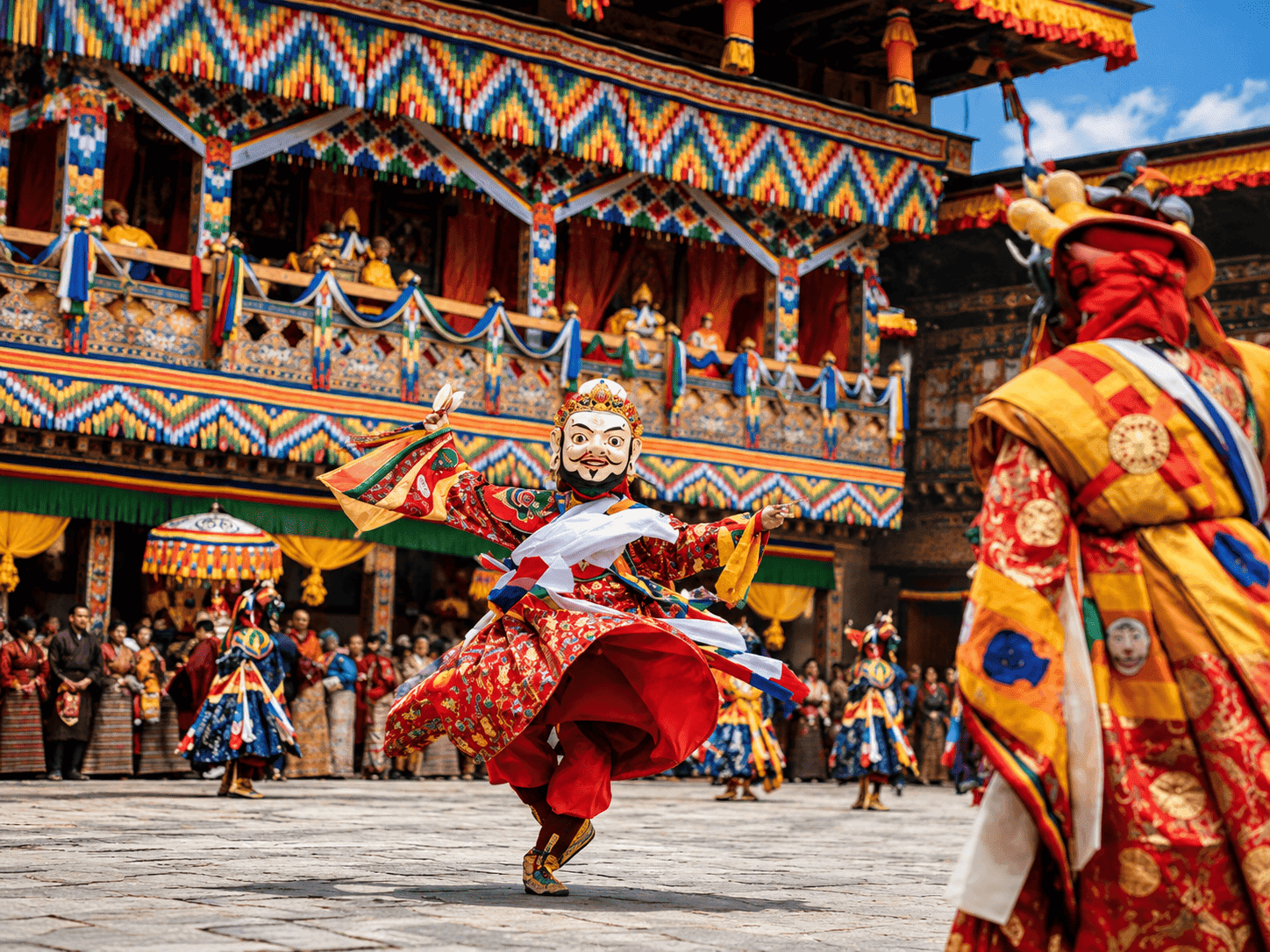
The best way to understand Punakha Festival is to stop thinking of it as something you simply watch. Its most memorable moments unfold through movement, sound, ritual and the people who arrive to be part of them.
1. The Pazaps Take Over the Courtyard
Watch local men transform into the Pazaps, dressed in traditional warrior attire. Their drills and mock battles recreate the historic defence of Bhutan, turning the courtyard of Punakha Dzong into a living scene from the country's past.
2. The Cham Dances Begin
Then the energy changes. Monks appear in elaborate masks and costumes, moving to drums and traditional instruments in carefully choreographed Cham dances. These sacred performances represent Buddhist teachings, deities and the triumph of positive forces over negativity.
3. The Thongdrel Appears at Dawn
On the final morning, arrive before sunrise for the unveiling of the enormous Thongdrel. The sacred silk tapestry is displayed only briefly, and witnessing it is traditionally believed to bring spiritual merit and liberation from the cycle of rebirth.
4. The Lame Dromchoe Recreates the Final Deception
One of the festival's most dramatic rituals draws directly from the story behind the Drubchen. Through theatrical performance, music and the symbolic throwing of the sacred relic into the river, the Lame Dromchoe recreates the deception associated with protecting Bhutan from its enemies.
5. Bhutanese Communities Arrive in Their Finest
Look beyond the performances and you'll notice another part of the festival unfolding around you. Families and communities arrive dressed in their finest Gho and Kira, with Bhutan's traditional dress remaining an important expression of cultural identity. Bhutan's official tourism information offers further context on the country's living traditions.
The spectacle is memorable. The context is what makes it extraordinary.
Where to Stay: Punakha’s Premium Retreats
Amankora Punakha
Set inside a 300-year-old former farmhouse, Amankora Punakha places you among rice fields and the subtropical landscape of the Punakha Valley. With only a small number of suites, it feels intimate rather than resort-like.
Historic setting: A 300-year-old farmhouse gives the stay a strong sense of place.
Peaceful retreat: Rice-field views and a quieter setting offer an escape from the festival crowds.
Wellness-led: Spa, meditation and yoga spaces make it easy to slow down after a day at the festival.
COMO Uma Punakha
Perched above the Mo Chhu River, COMO Uma Punakha is a small, intimate lodge with sweeping views across the valley. Its location also makes it a natural base for exploring Punakha's temples, villages, festivals and surrounding landscapes.
Valley views: Every room looks across the Punakha Valley and Mo Chhu.
Cultural access: The property can arrange experiences around villages, temples and local traditions.
Wellness & adventure: Combine festival days with hiking, rafting, meditation or Bhutanese wellness experiences.
Six Senses Punakha
Known as the “Flying Farmhouse,” Six Senses Punakha sits among rice fields overlooking the valley. Its 19 villas and suites combine Bhutanese-inspired details with expansive private spaces and views.
Landscape-first setting: Rice paddies, traditional farmhouses and mountains frame the property.
Private retreat: Spacious villas, valley views and select private plunge pools create a sense of seclusion.
Experiences beyond the festival: From cycling to Punakha Dzong to monastery visits and local experiences, the stay can extend the cultural journey.
Pemako Punakha
Set beside the Mo Chhu River, Pemako Punakha brings together tented luxury, Bhutanese architectural influences and a distinctly immersive landscape. Its villas feature private heated pools and expansive decks overlooking the valley.
Tented luxury: Private pools, large outdoor spaces and valley-facing decks make the accommodation part of the experience.
Deeply Bhutanese design: Traditional architectural elements and local influences run throughout the property.
Wellness with a sense of place: The Lotus Realm Spa draws on Sowa Rigpa, Bhutan's traditional system of medicine.
For a festival as culturally immersive as Punakha, where you stay can become part of the story, not simply where you return at night.
Make Punakha Part of Your Bhutan Story

Let IndiHorizons take you beyond the festival, with a thoughtfully curated journey through Punakha’s culture, landscapes and exceptional stays.
Beyond the Festival: Five Places Worth Exploring
Punakha is more than the six days of celebration. Once you've experienced the festival, give yourself time to see the valley at a different pace—from riverside dzongs and hillside temples to mountain passes and quiet glacial landscapes.
1. Punakha Dzong — Where History Meets the Rivers
Built at the confluence of the Mo Chhu and Pho Chhu, Punakha Dzong is both the setting for the festival and one of Bhutan's most significant historic landmarks. Come back when the crowds have gone and its architecture, murals and riverside setting tell a quieter story. Explore Punakha Dzong
2. Chimi Lhakhang — A Walk Through Lobesa
The journey to Chimi Lhakhang, known as the Temple of the Divine Madman, takes you through rice fields and rural villages before reaching the hilltop temple. It is an experience that feels as much about the walk through everyday Bhutan as the temple itself. Discover Chimi Lhakhang
3. Khamsum Yulley Namgyal Chorten — The Valley From Above
A short hike through rice fields and pine-covered hills leads to Khamsum Yulley Namgyal Chorten, an intricately decorated Buddhist monument overlooking the Punakha Valley. The reward is a sweeping view that makes the climb worthwhile. Explore Khamsum Yulley Namgyal Chorten
4. Dochula Pass — Bhutan at Its Most Panoramic
On the road between Thimphu and Punakha, Dochula Pass opens onto sweeping Himalayan views on clear days. The 108 Druk Wangyal Chortens add another layer of meaning to an already remarkable mountain setting. Discover Dochula Pass
5. Phobjikha Valley — Stay for the Quiet
If your journey extends beyond Punakha, make time for Phobjikha Valley, a broad glacial valley known for its peaceful landscapes and its winter population of black-necked cranes. After the energy of the festival, it offers a completely different rhythm of Bhutan. Explore Phobjikha Valley
Together, these places turn a Punakha Festival visit into something more complete: not just a few days around an event, but a deeper journey through the landscapes, stories and traditions of Bhutan.
Frequently Asked Questions About Punakha Festival 2027
1. When is Punakha Festival 2027?
The 2027 tentative calendar lists Punakha Dromchoe from 13–15 February, followed by Punakha Tshechu from 16–18 February, at Punakha Dzong.
2. What is the difference between Punakha Dromchoe and Punakha Tshechu?
The Dromchoe commemorates Bhutan's historic defence against Tibetan forces, while the Tshechu focuses on Buddhist teachings, sacred Cham dances and blessings.
3. Where is Punakha Festival held?
Both celebrations take place at Punakha Dzong, the historic fortress-monastery at the confluence of the Mo Chhu and Pho Chhu rivers.
4. What can you see at the Punakha Festival?
Expect warrior re-enactments, masked Cham dances, traditional music, religious rituals, the Thongdrel unveiling and large gatherings of Bhutanese communities in traditional dress.
5. How many days should you spend in Punakha for the festival?
If the festival is the centrepiece of your journey, three to four nights gives you enough time to experience the celebrations while leaving room for Punakha's temples, valley landscapes and premium stays.
Plan Bhutan at Its Best with IndiHorizons
Punakha Festival is only one part of the Bhutan story. IndiHorizons helps you build the journey around it—from choosing the right dates and premium stays to connecting the festival with Bhutan’s quieter valleys, cultural encounters and landscapes.
With on-ground expertise across the region, we take care of the details while keeping the journey personal, seamless and deeply connected to place.
You bring the dates. We’ll curate the Bhutan worth travelling for.