
One week. That's all you've got.
Maybe the urge to get away arrived suddenly. Maybe your calendar is finally cleared. Or maybe you simply decided that your next trip shouldn't take six months of planning to become real.
Either way, South Asia probably wasn't the first place you thought of.
India, Nepal and Bhutan can seem like destinations that demand research, planning and plenty of time. Yet, with the right approach, a week can be enough to turn one of them into a remarkable escape.
And there's another reason to look closer.
You've probably already encountered India, Nepal and Bhutan without realising how much you know, or how much you don't.
India may be more familiar to you than you realise, in the words you use, the food you eat, the wellness practices you follow and the culture you consume. Nepal is instantly recognisable through the Himalayas. Bhutan arrives in photographs of monasteries perched above impossibly green valleys.
But a familiar image can make a country seem more familiar than it really is.
So what happens when you stop looking at the postcard and start looking at the place?
This is a guide for that one-week window: what makes India, Nepal and Bhutan worth considering, what each can offer when time is limited, and—most importantly—what you actually need to arrange if you're thinking about leaving next week.
Table of Contents
India: The Country You’ve Already Met
Nepal: More Than a Mountain View
Bhutan: Where a Week Feels Different
India, Nepal or Bhutan? Find Your Kind of Escape
Can You Really Leave Next Week? A Visa & Entry Guide
The 7-Day Reality Check
Frequently Asked Questions
One Week. Three Countries. A Different Way to Travel.
1. India- The Country You’ve Already Met, But Don’t Know Yet

India Is Already Part of Your Everyday Life
You may encounter India more often than you realise. Its influence appears in everyday language (shampoo, pajamas, bungalow, guru), wellness (yoga, turmeric, meditation), food (chai, spices, turmeric), mathematics (zero and the decimal system) and even popular culture, where Indian philosophy has influenced films and storytelling around the world.
And yet, knowing these fragments of India is very different from experiencing the country itself.
So, How Much of India Do You Really Know?
You’ve probably met India before you’ve ever visited it. But how much of the country have you actually encountered?
You know Indian food, but have you experienced how dramatically it changes from one region to another?
You know yoga and Ayurveda, but have you experienced the traditions in the places that shaped them?
You’ve seen Bollywood, Diwali and Holi, but what about the everyday culture that rarely reaches your feed?
You know the Taj Mahal, but how much do you know about the cities, crafts, kitchens and contemporary India beyond it?
You’ve encountered India in fragments for years, so what happens when you finally put those fragments together?
Then There’s the India You Haven’t Seen Yet
India Through Its Cities
Mumbai's cinematic energy, Delhi's layers of history and Rajasthan's living heritage reveal three very different Indias — all within one country.
India Through Food
Forget “Indian cuisine” as one thing. From coastal kitchens to royal Rajasthani tables, every region brings its own ingredients, techniques and stories to the plate.
India Through Culture
Here, culture isn't something you simply visit. It's in morning rituals, inherited crafts, neighbourhood celebrations and traditions that continue to shape everyday life.
India Through Luxury
Think beyond five-star hotels: restored palaces, private heritage experiences, extraordinary regional dining and local access that makes luxury feel deeply connected to place.
India Beyond the Familiar
Contemporary art, design, fashion, architecture, ambitious restaurants and a new generation of entrepreneurs reveal an India that is looking firmly towards tomorrow.
What Do You Take Away From India?
A taste for contrasts: where ancient and contemporary can exist on the same street.
A new appreciation for regional identity: because “Indian” is only the beginning of the story.
An understanding that heritage can be lived, not simply preserved.
A different definition of luxury: one built around access, place and meaningful encounters.
The realisation that one trip can introduce you to India — but never quite finish the introduction.
Ready to Meet India Beyond the Familiar?
2. Nepal- More Than the Mountain in the Distance
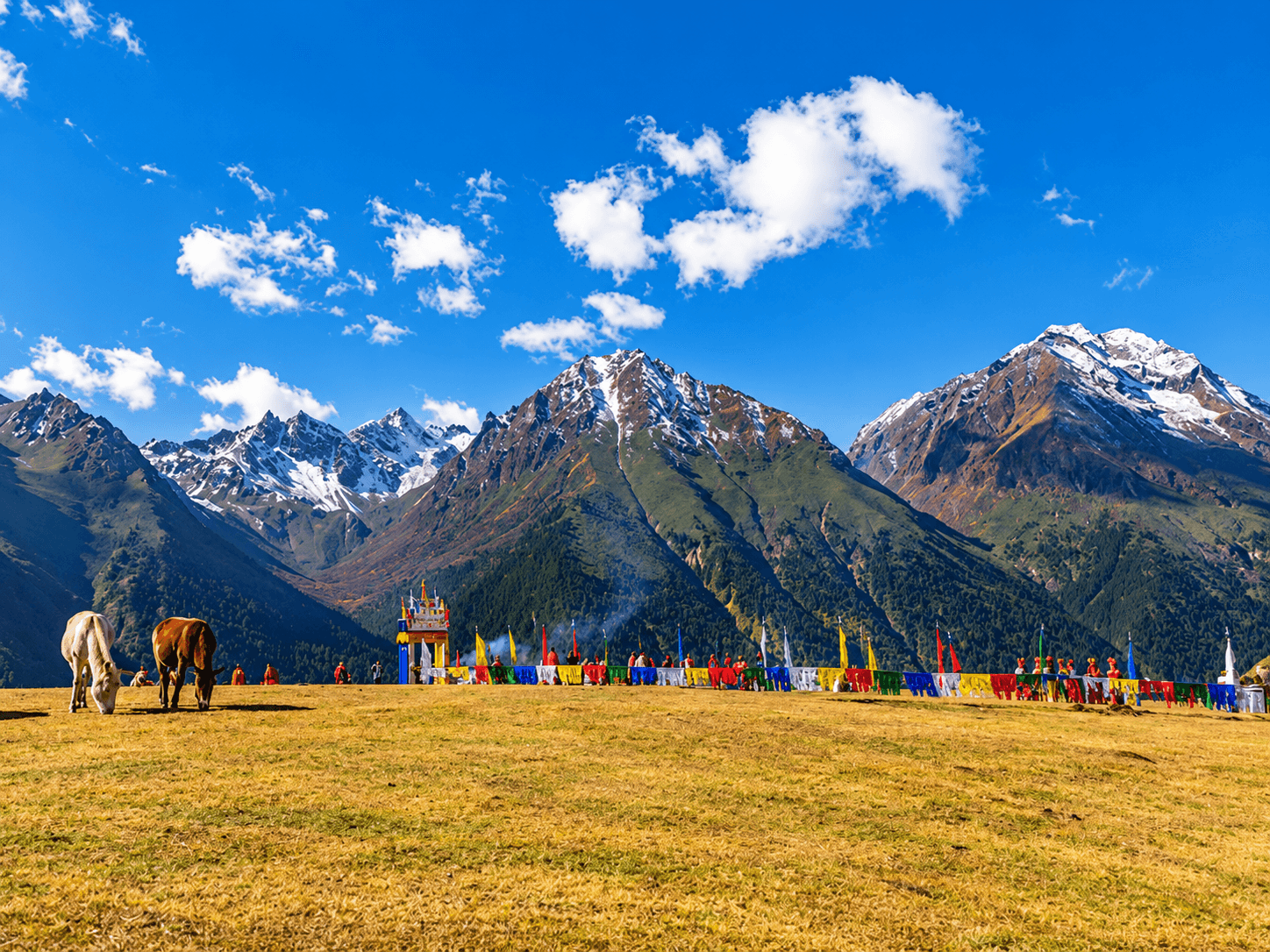
So, How Much of Nepal Do You Really Know?
You probably know Nepal through one image: the Himalayas. But is Nepal only about standing beneath a snow-covered peak?
You know Everest, but have you seen the Sherpa culture and landscapes of Sagarmatha National Park that surround it?
You know Kathmandu, but have you explored the centuries-old Newari architecture of Patan and Bhaktapur?
You think of trekking, but what if your Nepal story includes safaris, lakes, food, craft and ancient citiesinstead?
You associate Nepal with mountains, but did you know its landscapes descend all the way into the wildlife-rich Terai plains of Chitwan National Park?
And if the Himalayas are what bring you here, what else might make you stay?
Then There’s the Nepal You Haven’t Seen Yet
Nepal Through Its Cities
Kathmandu is more than a gateway to the mountains. Its streets bring together ancient temples, stupas, carved wooden architecture and contemporary city life, while Patan and Bhaktapur reveal the extraordinary Newari craftsmanship that shaped the Kathmandu Valley.
Nepal Through Food
Nepali food doesn't need to compete with its scenery. From momos eaten between explorations to the distinctive flavours of Newari cuisine, food here offers another way into the country's regional identities and everyday culture.
Nepal Through Culture
Here, Hindu and Buddhist traditions don't simply occupy different corners of the map; they have shaped everyday life together for centuries. Festivals, processions, sacred spaces and living traditions make culture something you encounter while moving through Nepal, rather than something you have to seek out. Nepal Tourism Board offers a useful window into this cultural landscape.
Nepal Through Nature
And then the landscape changes completely. Pokhara brings lakes and Annapurna views, while Chitwan takes you into the Terai, where one-horned rhinoceroses and Bengal tigers inhabit a very different side of Nepal.
Nepal Through Luxury
Luxury in Nepal doesn't have to mean excess. It can be a beautifully placed mountain lodge, a quiet morning overlooking the Annapurnas, a private cultural encounter or simply having enough time to experience a place without rushing through it.
What Do You Take Away From Nepal?
A landscape that keeps changing: mountains, valleys, lakes and jungle within one country.
A deeper understanding of the Himalayas: not just as scenery, but as home to communities and cultures.
A different idea of adventure: one that doesn't require conquering a mountain.
An appreciation for living heritage: where architecture, religion, festivals and craft remain part of everyday life.
The feeling that you came for the mountains but discovered a country much bigger than them.
Ready to See the Nepal Beyond Everest?
3. Bhutan- The Country That Makes You Rethink What a Journey Can Be
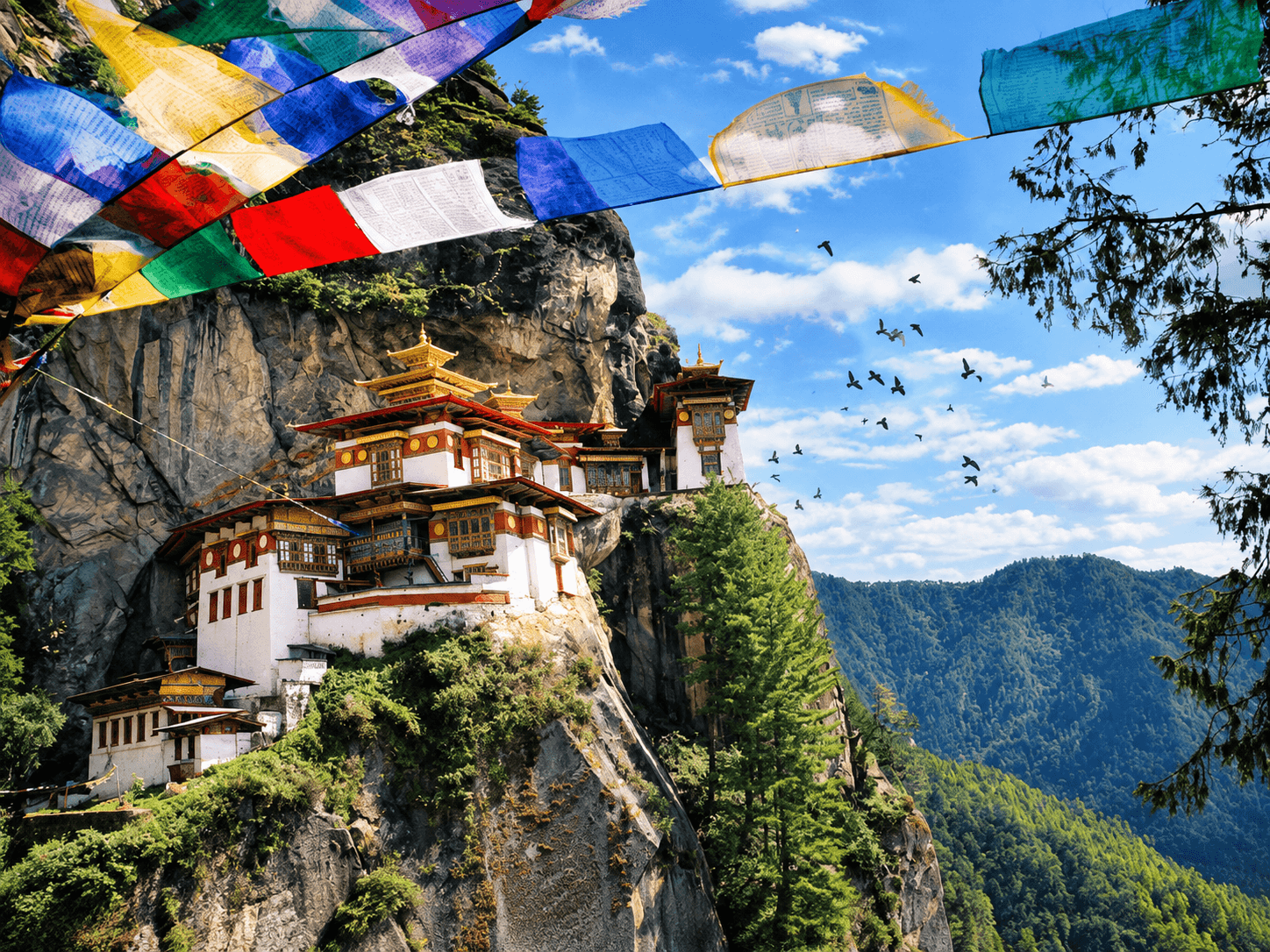
So, How Much of Bhutan Do You Really Know?
You probably know Bhutan through a handful of unforgettable images: a monastery clinging to a cliff, prayer flags moving in the mountain air, and endless Himalayan valleys. But what if those are only the introduction?
You know Tiger’s Nest, but have you wondered what life looks like beyond the monastery everyone photographs?
You associate Bhutan with mountains, but did you know more than 70% of the country remains under forest cover?
You think of Bhutan as remote, but its distance is part of what has helped preserve its distinct culture and landscapes.
You may have heard of its famous approach to “Gross National Happiness”, but how does that philosophy actually appear in everyday life?
And if Bhutan is known for slowing down, what might you notice when you stop trying to fill every hour?
Then There’s the Bhutan You Haven’t Seen Yet
Bhutan Through Its Valleys
From Paro to Punakha, Bhutan unfolds through quiet valleys, rivers, forests and mountain roads where the journey itself becomes part of the experience.
Bhutan Through Culture
Bhutanese culture isn't confined to monasteries. It appears in the country's distinctive architecture, traditional dress, festivals and everyday Buddhist practices—a living culture that remains deeply woven into daily life. Bhutan’s official tourism guidance offers a glimpse into the traditions behind the imagery.
Bhutan Through Food
Expect heat. A lot of it. Ema datshi, the country's chilli-and-cheese staple, is perhaps the most delicious reminder that Bhutanese food isn't designed to be timid. Meals here are simple, local and deeply connected to the country's agricultural traditions.
Bhutan Through Nature
Bhutan's landscapes are not simply beautiful backdrops. Its forests support extraordinary biodiversity, from Himalayan birds to elusive mammals, while protected areas cover a significant portion of the country. The Bhutan Trust Fund for Environmental Conservation provides insight into the country's long-standing conservation efforts.
Bhutan Through Luxury
Here, luxury can mean having nowhere else to be. A private valley experience, an intimate heritage stay, a quiet mountain morning or a carefully arranged cultural encounter can feel more indulgent than a packed itinerary ever could.
What Do You Take Away From Bhutan?
A slower sense of time: where a morning doesn't need to be filled to be meaningful.
A closer relationship with place: mountains, monasteries and villages become part of the same story.
A different definition of luxury: privacy, silence, space and access become the indulgence.
A culture that feels lived-in: not staged for visitors, but carried through everyday life.
The rare feeling of having genuinely stepped away: not just travelled somewhere different, but experienced a different rhythm.
Ready to Experience Bhutan Differently?
4. India, Nepal or Bhutan? Find the Journey That Fits You
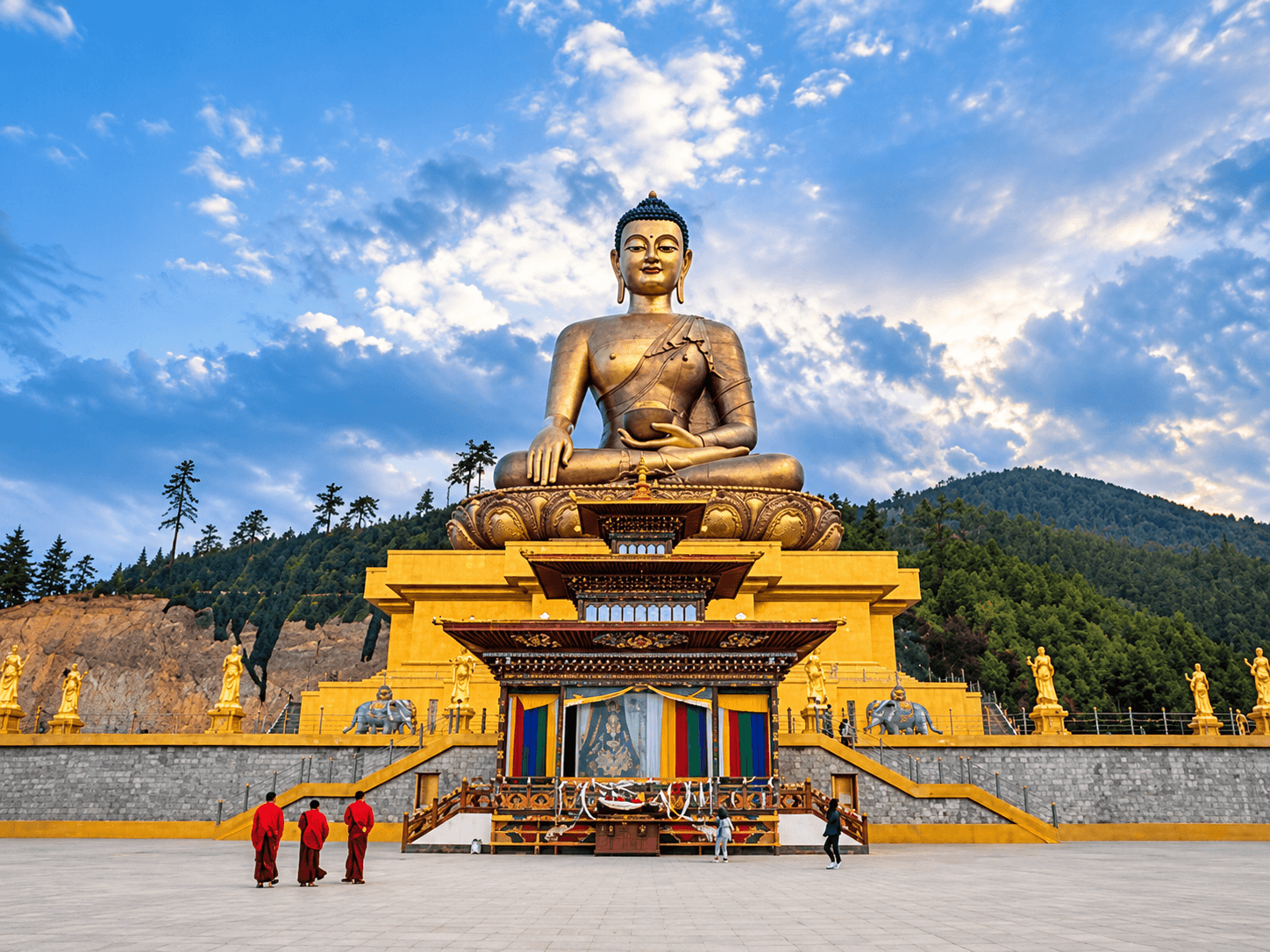
By now, the question isn't really which country is better. Its; What kind of week do you want to have?
If you're looking for… | India | Nepal | Bhutan |
Cultural immersion | History, art, craft & living traditions | Hindu-Buddhist heritage & Newari culture | Buddhist traditions & preserved heritage |
Food discovery | Regional cuisines with huge variety | Newari, Himalayan & local flavours | Distinctive chilli-led Bhutanese cuisine |
Mountains & landscapes | Himalayas, deserts, forests & coasts | Himalayan peaks, valleys & lakes | Himalayan valleys, forests & rivers |
Adventure | Wildlife, safaris & active exploration | Trekking, rafting & mountain experiences | Hiking, cycling & outdoor exploration |
Wildlife | Tigers, elephants, leopards & more | Rhinos, tigers & Himalayan wildlife | High-altitude & forest biodiversity |
Luxury | Palaces, heritage hotels & private access | Mountain lodges & intimate experiences | Secluded stays, space & slow travel |
Contemporary energy | Strongest — design, fashion, art & new hospitality | Emerging | Intentionally understated |
Slow, reflective travel | Possible, depending on itinerary | Strong | Strongest |
Best for a first South Asia experience | India | Nepal | Bhutan |
Best if you want… | A little bit of everything | Adventure with depth | A genuine change of pace |
The beauty of choosing between them is that none of these destinations asks you to travel the same way. India can leave you exhilarated, Nepal can leave you humbled by scale, and Bhutan can make you wonder why you were in such a hurry in the first place.
The easiest way to choose?
Choose India if you want variety, cultural depth, food and the energy of a country constantly reinventing itself.
Choose Nepal if the mountains are calling but you want your journey to extend well beyond trekking.
Choose Bhutan if what you're really looking for is space—to slow down, look around and experience somewhere that hasn't been shaped entirely around speed.
And if you're still tempted to see all three? That's where the next question matters: how much can you realistically arrange when you're thinking about leaving next week?
Can You Really Leave Next Week? A Visa & Entry Guide
A last-minute trip still needs a little paperwork. The good news? India, Nepal and Bhutan each have different levels of preparation.
India: The E-Visa Advantage
For eligible travellers, India’s e-Visa can be applied for online, making it one of the more practical options when you're planning on short notice. The official portal advises applying at least four days before arrival, though earlier is always wiser.
Nepal: Keep It Simple
Nepal offers online tourist visa applications as well as visa-on-arrival facilities for eligible travellers. Tourist visas are available for 15, 30 or 90 days, making Nepal a relatively straightforward choice when your departure date is approaching quickly.
Bhutan: Possible, But Plan Ahead
Bhutan requires most international visitors to obtain a visa before arrival. Applications are reviewed within five working days, and the current Sustainable Development Fee is US$100 per adult per day, plus a one-time US$40 visa fee.
So, can you leave next week? Potentially, yes. Just remember: a last-minute trip doesn't have to mean a last-minute visa application.
Frequently Asked Questions
1. Can you really plan a trip to India, Nepal or Bhutan one week before departure?
Yes, potentially, but the three destinations have different entry requirements. India requires a visa for most foreign visitors, Nepal offers visa-on-arrival for eligible nationalities, while Bhutan requires most visitors to obtain a visa before travel.
2. How long does an India e-Visa take?
For eligible travellers, India's official e-Visa system allows applications online. The government recommends applying at least four days before the intended arrival, although applying earlier is strongly advisable for a last-minute trip. India's official e-Visa portal
3. Can I get a Nepal visa on arrival?
For eligible travellers, yes. Nepal provides visa-on-arrival facilities at Tribhuvan International Airport and designated entry points, with tourist visas available for 15, 30 or 90 days. Nepal Tourism Board's visa information
4. How quickly can I get a Bhutan visa?
Bhutan's official tourism guidance says a correctly completed visa application can take up to five days to process. Most international visitors must obtain the visa before travelling. Bhutan's official visa information
5. Which is easiest for a first South Asia trip?
There isn't one universal answer. India offers the widest variety, Nepal is compelling if mountains and adventure are your priority, while Bhutan suits travellers looking for a slower, more curated experience.
6. Can I visit India, Nepal and Bhutan in the same trip?
Yes, it is possible to combine them, but doing all three in only seven days would leave very little time to experience any of them properly. For a one-week escape, choosing one destination, or at most a carefully connected combination, is usually the more rewarding approach.
One Week. Three Countries. A Different Way to Travel.
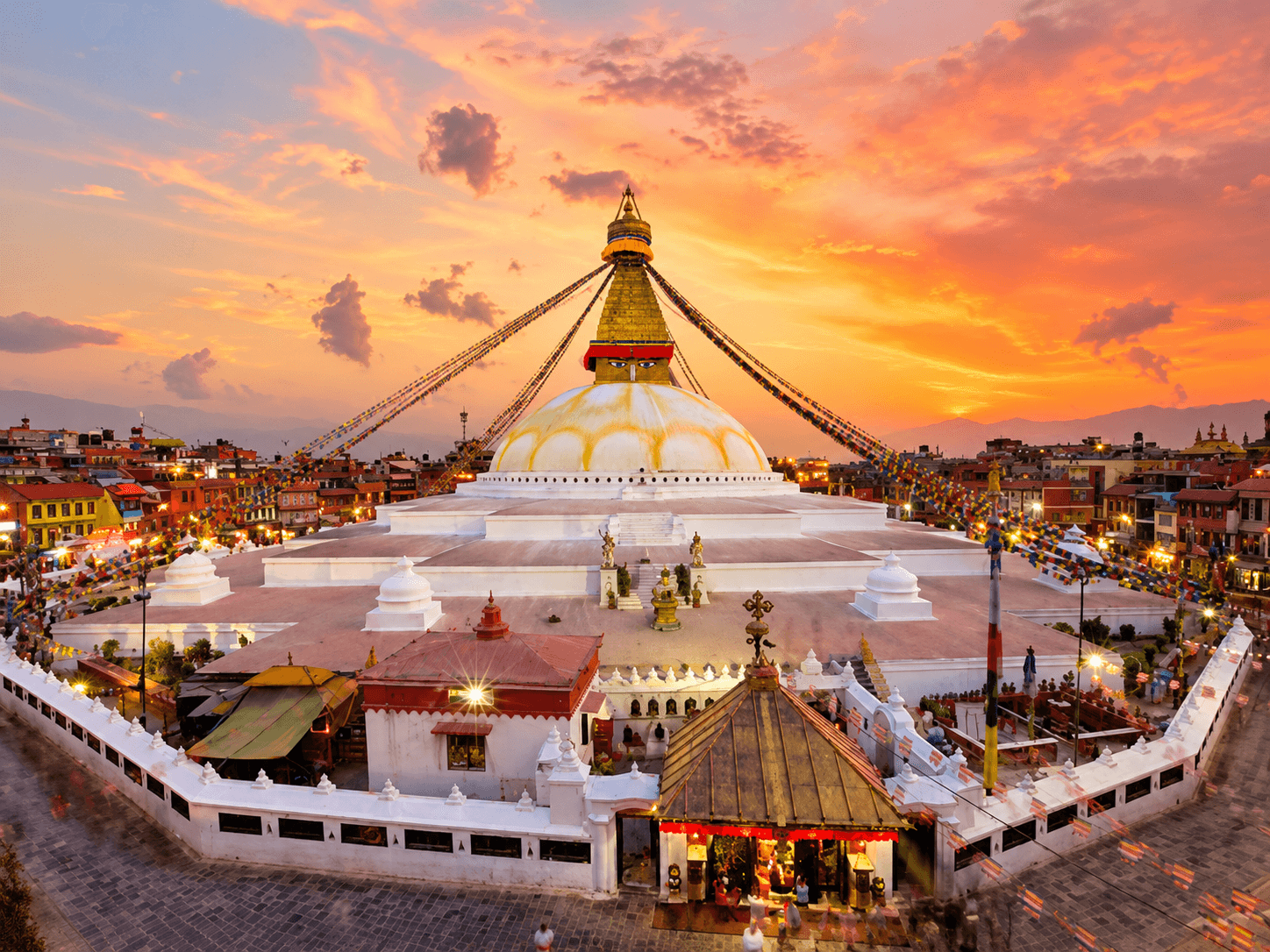
You don't need months to decide that you want to go somewhere. Sometimes, you simply need a week, an open calendar and a destination that can meet you halfway.
India, Nepal and Bhutan each offer a different answer to that impulse. One gives you extraordinary variety, one takes you from cities to the Himalayas, and one asks you to slow the pace altogether.
The difference is knowing what can realistically be arranged, and what is worth making the effort for.
And if this article has made you look at South Asia a little differently, perhaps that's the point. The best last-minute trip isn't necessarily the one you planned the fastest. It's the one you didn't realise was possible.
Ready to make the week count?
Let IndiHorizons turn a short window into a journey that feels anything but short.