
When most travellers envision a journey to Nepal, their minds naturally map out a familiar triangle: the historic temple squares of Kathmandu, the lakeside serenity of Pokhara, and the subtropical wilderness of Chitwan National Park. For decades, this classic route has defined the country's tourism story, offering an unforgettable introduction to Nepal's rich culture, landscapes, and wildlife.
Yet a new generation of global travellers is seeking something beyond the familiar. Having experienced the world's finest safari lodges, island retreats, and desert camps, they no longer travel simply to tick off destinations. Instead, they seek rare, unhurried encounters that offer a deeper connection to the places they visit.
Beyond Nepal's bustling valleys lies an entirely different world, where the crisp air of Manang, the wind-carved landscapes of Mustang, and the profound stillness of the Himalayas redefine the meaning of luxury travel. Here, the journey is shaped not by iconic landmarks alone, but by moments of quiet discovery, authentic cultural encounters, and landscapes that leave a lasting impression long after the adventure ends.
The Transcendence of High-Altitude Travel: A Personal Prelude
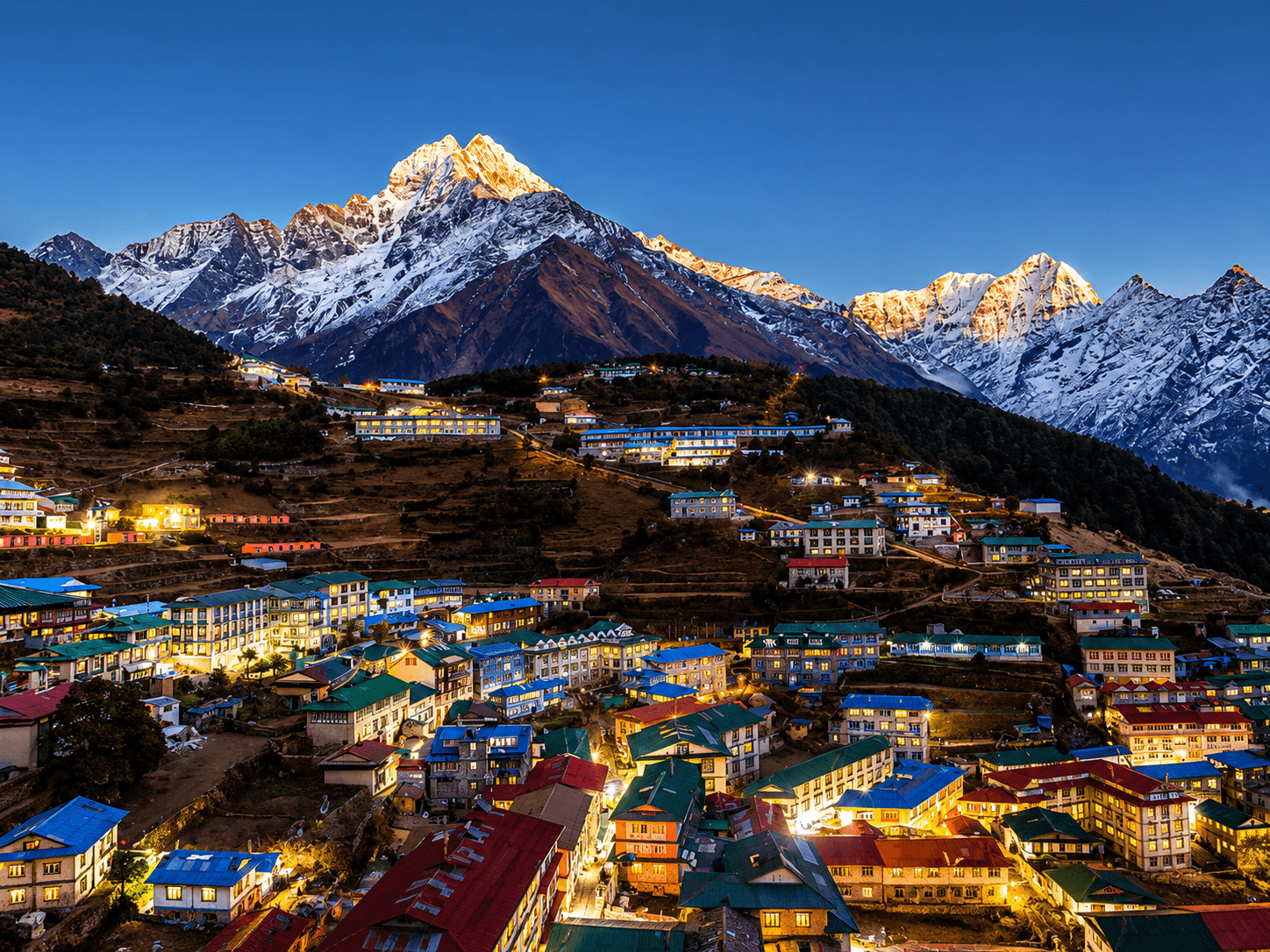
To truly understand Nepal's upper Himalayan valleys, one must first understand the feeling they leave behind. For many travellers, the journey begins long before reaching Manang or Mustang. It begins with the first glimpse of snow-covered peaks rising above the clouds, the crisp mountain air, and the quiet realisation that the familiar world has been left behind.
For generations, arriving in Jomsom has marked the gateway to this extraordinary landscape. Surrounded by towering mountains and shaped by the winds of the Kali Gandaki Valley, the journey into these remote highlands is as memorable as the destination itself. Every turn reveals a deeper sense of stillness, where dramatic scenery and ancient cultures unfold at a pace that invites reflection rather than haste.
It is through these first impressions that Nepal transforms from a destination into an experience. The valleys of Chame, Manang, and Mustang are not simply places to visit—they are landscapes that reshape the way travellers connect with the Himalayas, offering a quieter, more profound perspective long after the journey ends.
1. Kathmandu and Pokhara: The Essential Foundations of Contrast
Every great journey needs a counterpoint. To fully appreciate the immense silence and dramatic scale of the high Himalayas, an exploration should ideally begin by anchoring itself in the rich cultural tapestry of Nepal’s historic lowlands. This creates a brilliant narrative contrast, allowing travellers to transition gradually from vibrant urban heritage to absolute alpine isolation.
The Living Rhythms of Kathmandu
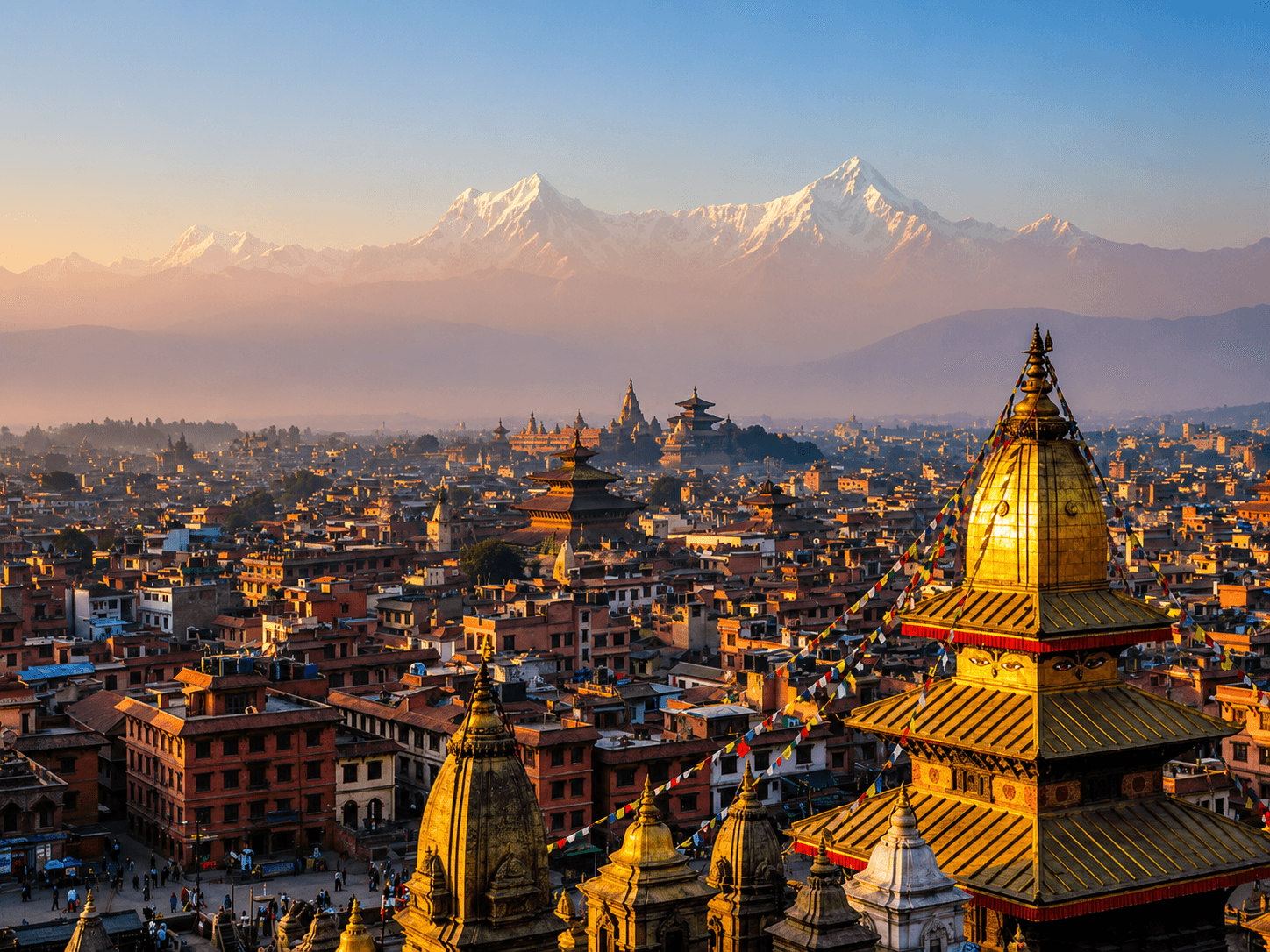
Before ascending into the clouds, the historic capital of Kathmandu offers a sensory immersion into a world where the ancient and the modern live side by side. This is a city defined by hidden courtyards, centuries-old brick architecture, and the smell of incense drifting from neighbourhood shrines.
The true luxury of Kathmandu is found by stepping away from the commercial districts and exploring its living traditions. It is found in the quiet corners of Patan and Bhaktapur, where master woodcarvers and brass-smiths continue to use techniques developed during the Malla Dynasty. It is found in the presence of the Kumari, the Living Goddess, whose traditional residence stands as a testament to the unbroken spiritual lineage of the Newar people. Kathmandu teaches us how culture endures, providing an essential historical framework for the entire region.
The Softness of Pokhara
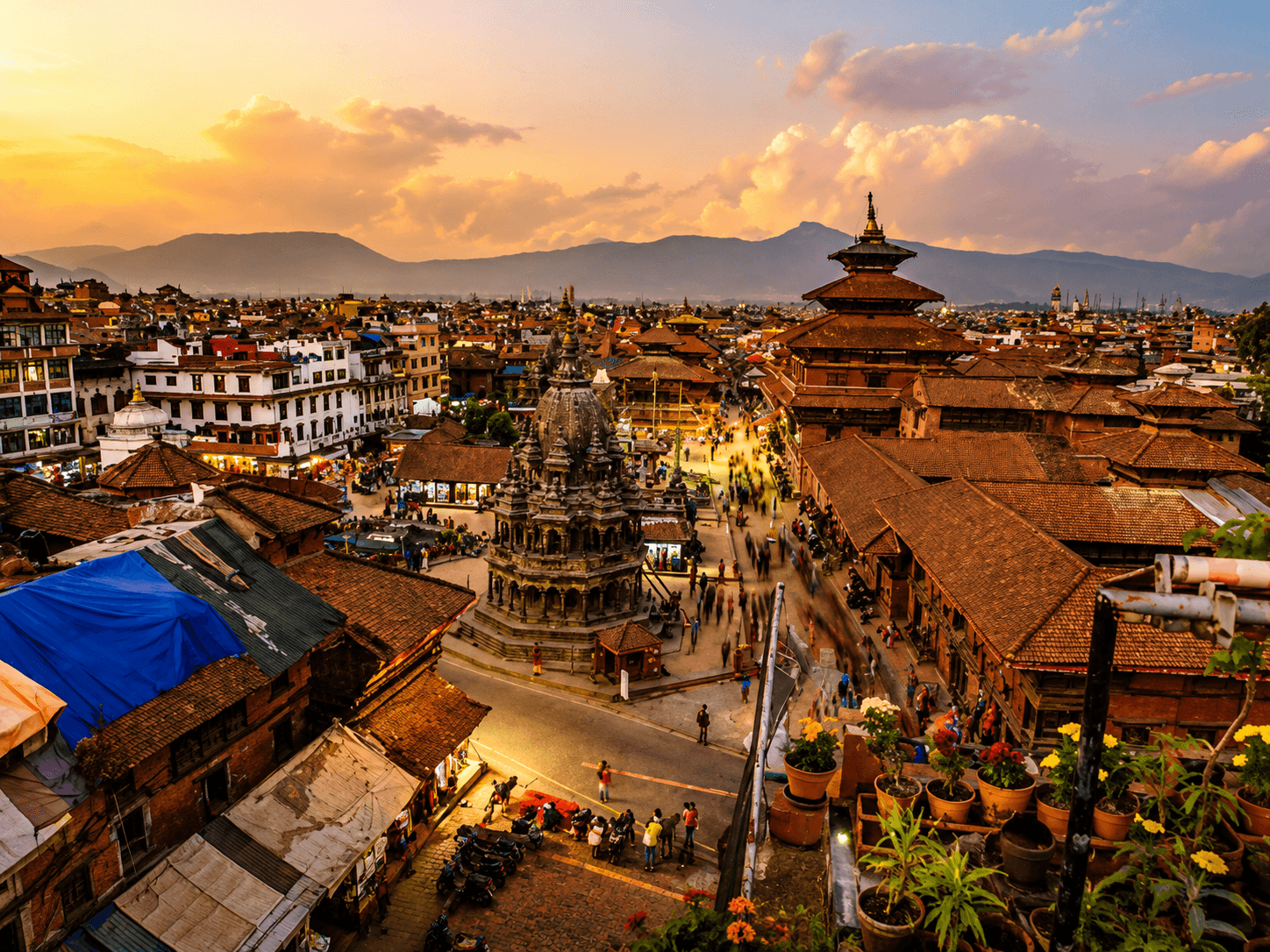
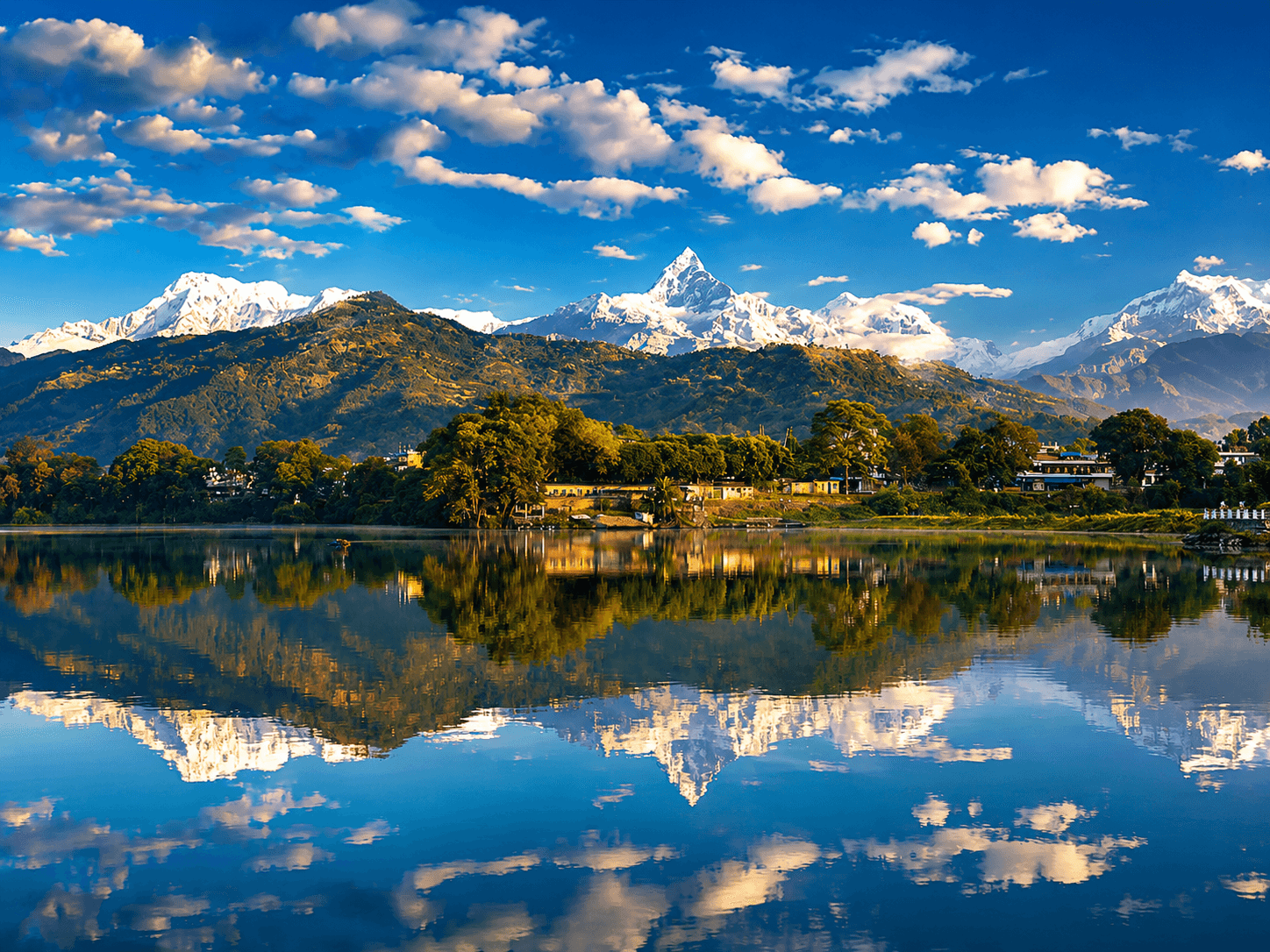
As you move westward toward the mountains, Pokhara offers a complete change of pace. Nestled beside the calm waters of Phewa Lake and framed by the dramatic, fish-tailed peak of Machapuchare, Pokhara represents the "softness" of Nepal. It is a place of breath, reflection, and natural beauty, where the air grows noticeably crisper and the pace of life slows down. It serves as the perfect psychological transition zone—a place to rest, realign, and look up at the massive peaks that guard the hidden valleys further north.
2. Manang and Chame: The Threshold of Stillness and Alpine Solitude
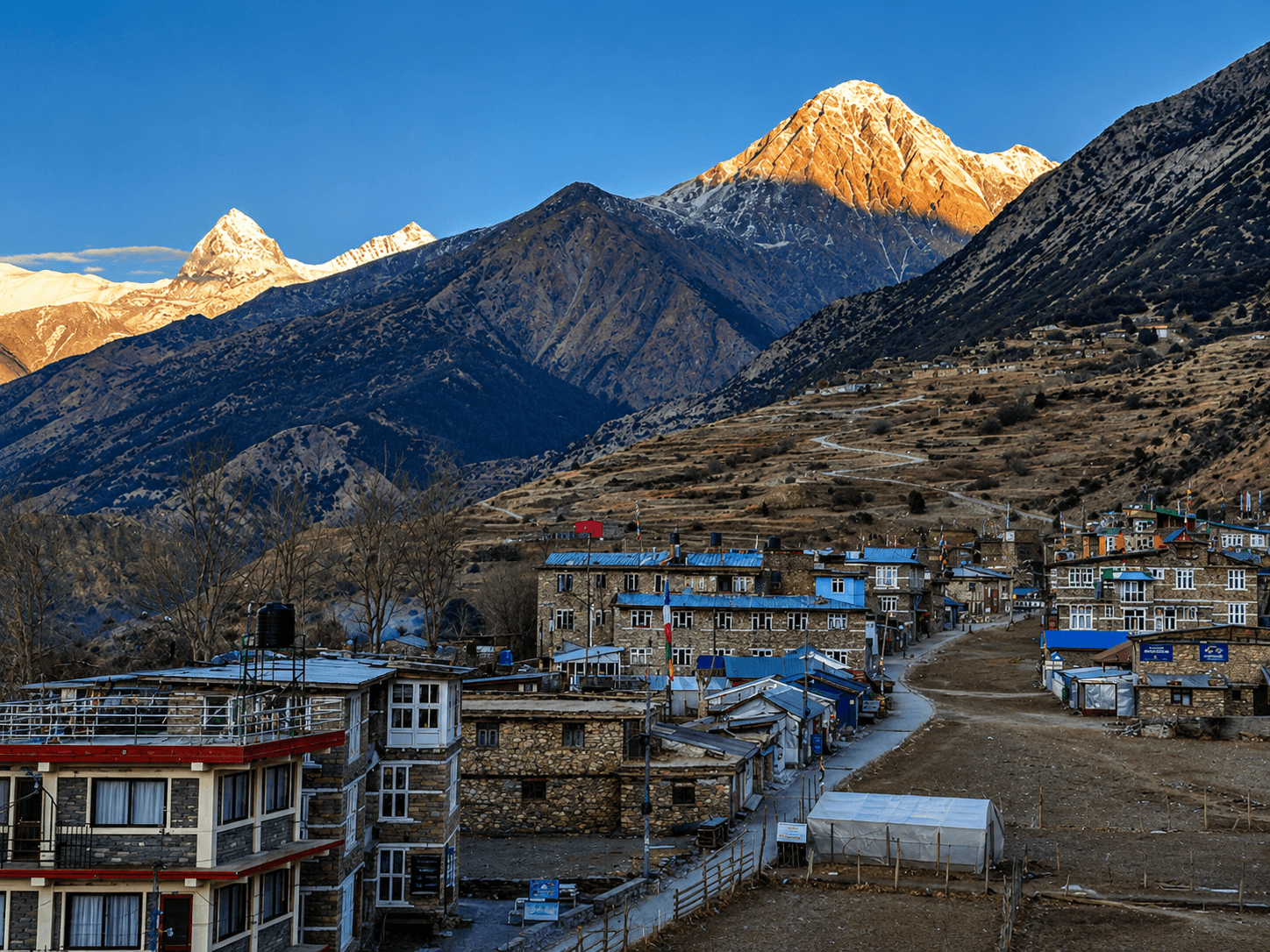
As you leave the lower valleys behind, the transition into the high-altitude world begins in earnest. For those seeking true exclusivity, traditional long, exhausting overland drives are completely replaced by private, seamless helicopter journeys. Sweeping over deep gorges and terraced hillsides, the helicopter acts as a time machine, carrying you swiftly up into the dramatic alpine landscapes of Chame and Manang.
Here, the landscape shifts dramatically. Pine forests, rushing glacial rivers, and sheer granite cliffs dominate the view. Manang sits in a broad valley rain shadow, surrounded by some of the highest peaks on Earth, including the Annapurna massif. This region offers an intimate, authentic look at Himalayan life that remains completely unaltered by the hand of mass tourism.
Moments of Unstaged Immersion
The luxury of Manang is not defined by opulent marble lobbies, but by the extraordinary quality of access and the raw beauty of its environment. It is found in:
High-Altitude Footpaths: Walking through ancient stone villages where the roofs are piled high with firewood and the alleys are lined with rows of prayer wheels.
Living Monasteries: Visiting cliffside monasteries where the deep, rhythmic chanting of monks and the scent of juniper smoke have continued uninterrupted for generations.
Riverside Bonfires: Spending evenings under some of the clearest, starlight-filled skies on the planet, sharing stories and local apple wine beside a roaring fire while the mountain peaks glow in the moonlight.
These are not staged attractions engineered for tourist entertainment. They are genuine, deeply rooted moments of Himalayan life that travellers are quietly, respectfully invited into. It is a place where time is measured not by clocks, but by the movement of the sun across the glaciers.
3. Upper Mustang: The Forbidden Kingdom Reimagined for the Modern Explorer
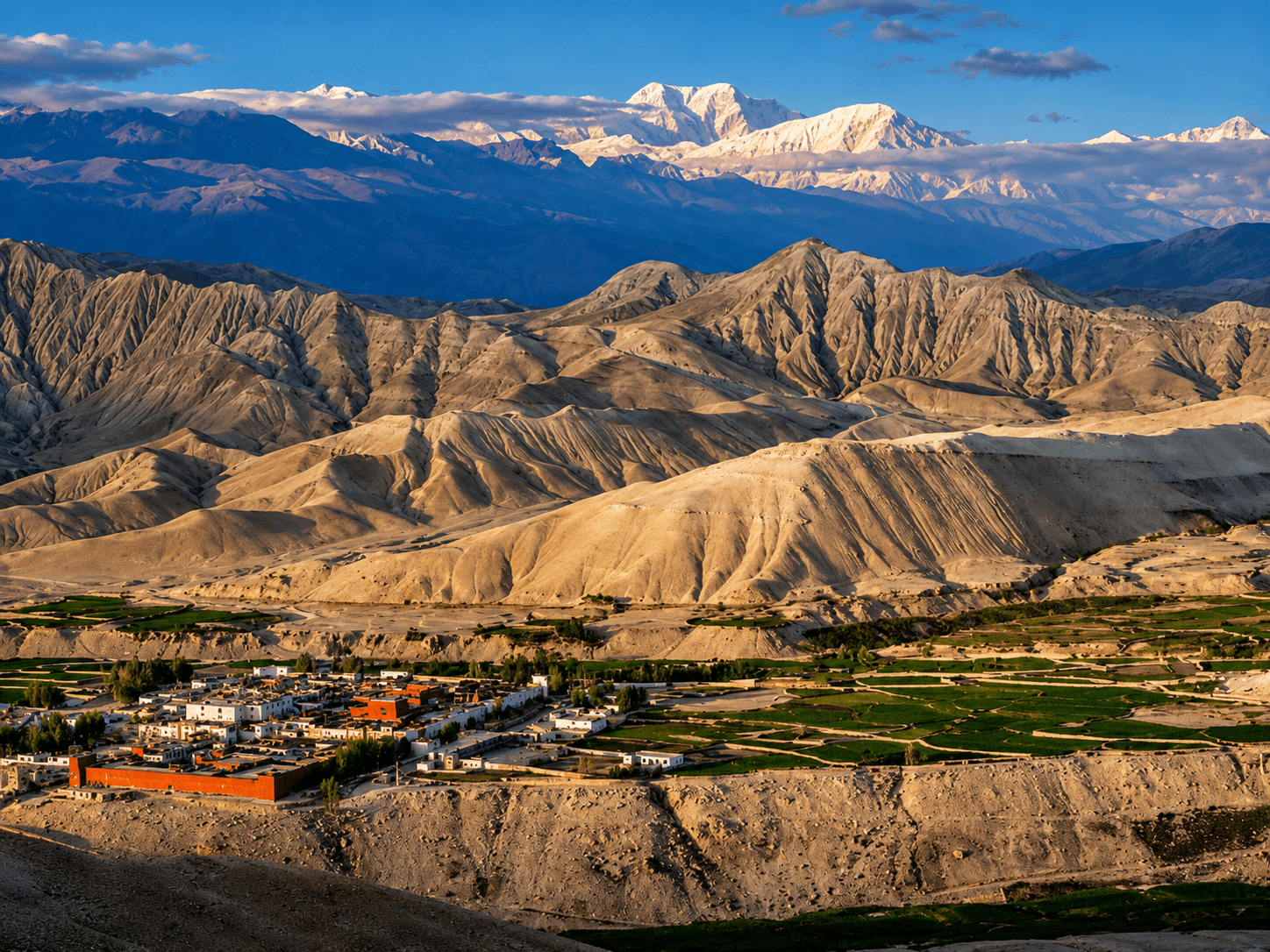
Just when you believe your journey has reached its architectural and spiritual peak, Nepal reveals its most exclusive layer. Crossing over the mountain barriers, the landscape undergoes a startling transformation. You enter Mustang, a region that feels less like the rest of Nepal and more like an entirely separate world altogether.
Mustang—the ancient Kingdom of Lo—was completely closed to foreigners for centuries, preserving a pure, classical Tibetan culture in near-absolute isolation. Geographically, it is a high-altitude desert of striking beauty: wind-carved red cliffs, deep river gorges, and whitewashed villages tucked into green oases of barley fields against a backdrop of snow-capped mountains.
The Intersection of Wild Wilderness and Masterful Design
For the ultra-luxury traveller, Mustang is no longer a destination reserved exclusively for rugged, punishing expeditions. Today, this forbidden kingdom has been thoughtfully reinterpreted through exceptional design and hospitality.
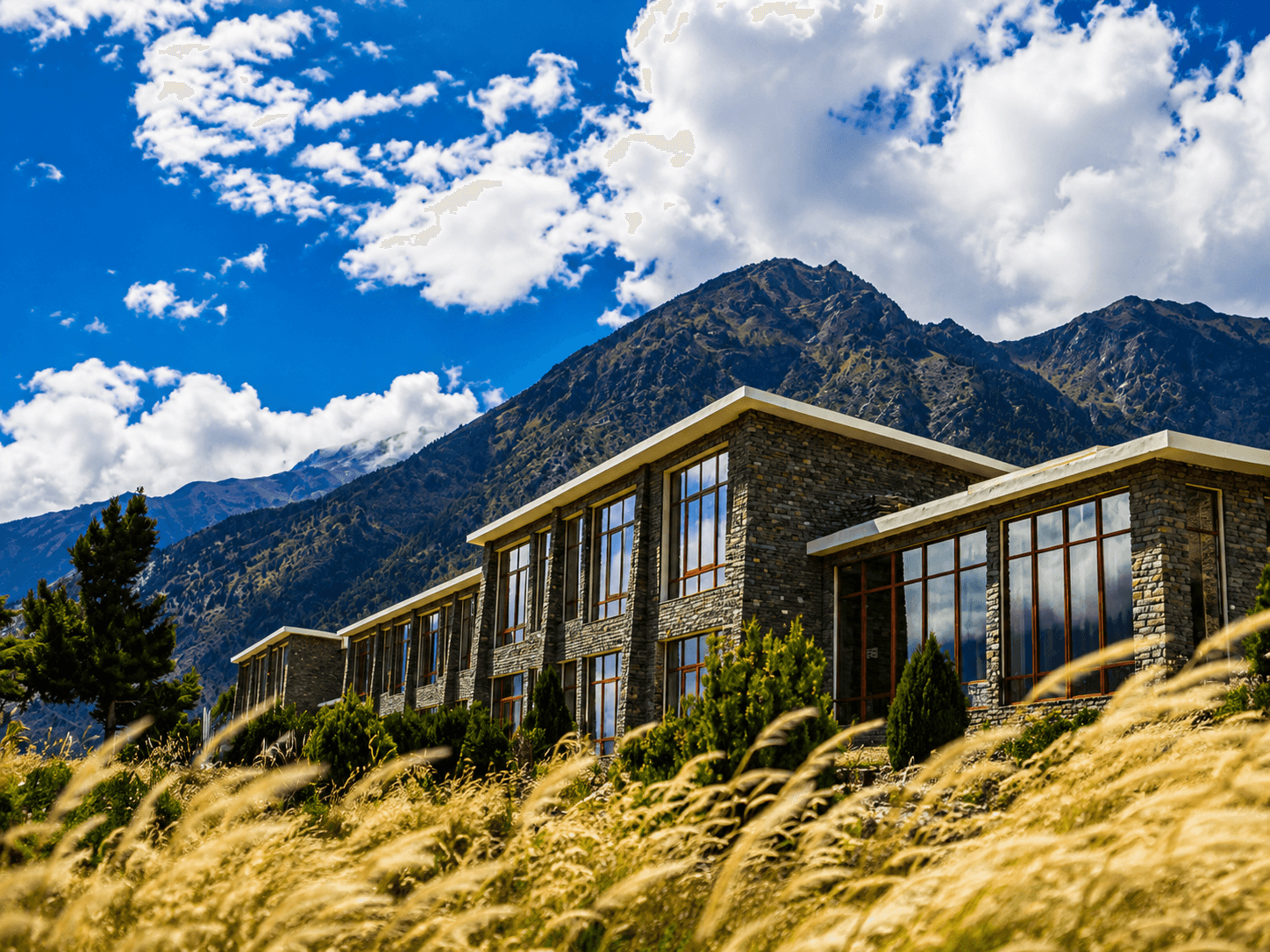
At the heart of this destination sits Shinta Mani Mustang – A BENSLEY Collection. Resting at an elevation of 2,800 meters above sea level, this remarkable property represents a masterclass in contextual luxury. Designed by the legendary architect Bill Bensley, the lodge mimics the traditional architecture of local stone dwellings while offering an ultra-luxurious, deeply comfortable sanctuary within one of the most dramatic landscapes on the globe. Below the property, the powerful Kali Gandaki River cuts through the earth, forming the deepest gorge in the world.
Glances Into an Unchanged World
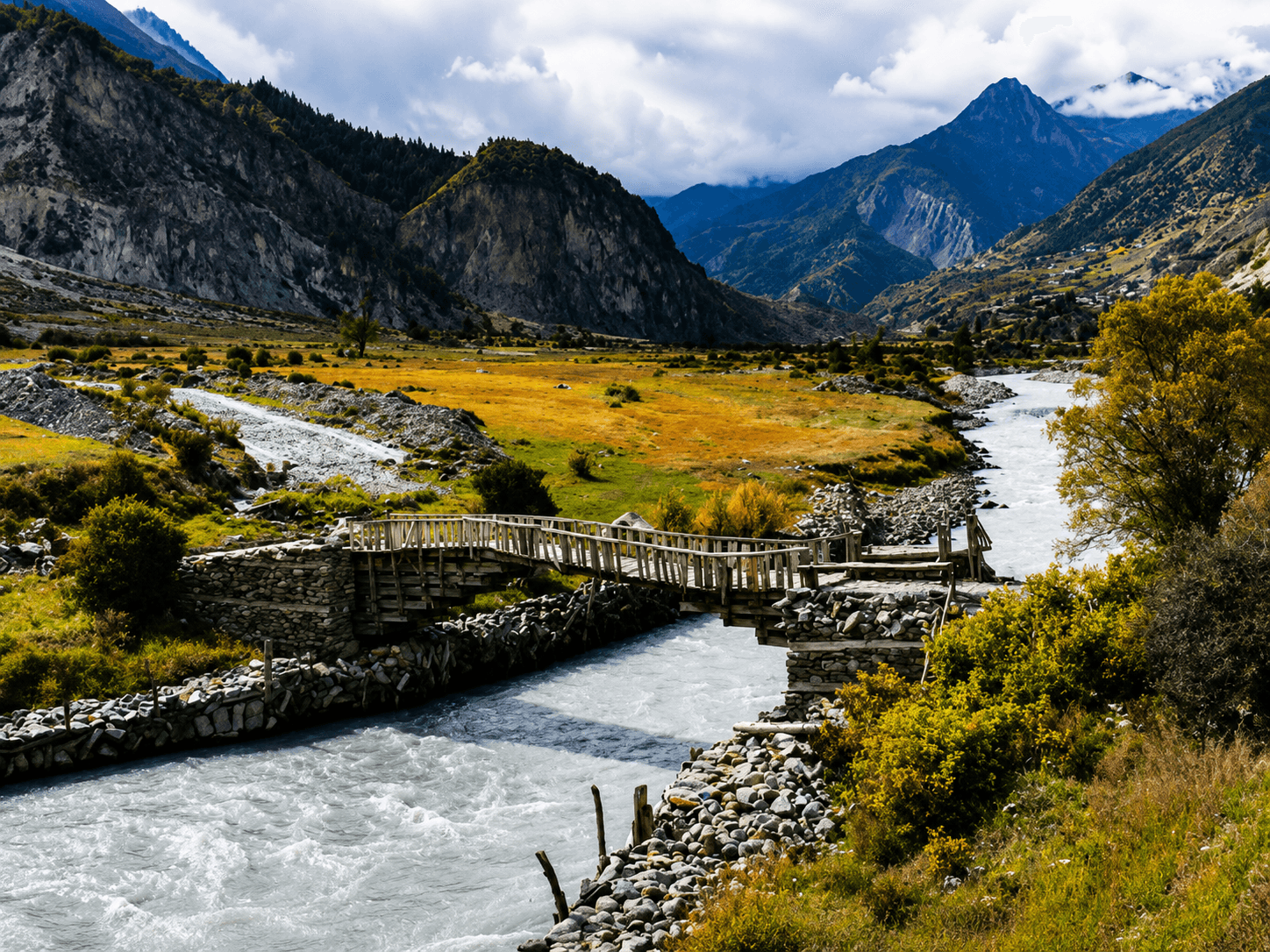
Exploring Mustang is an exercise in time travel. The experiences available here offer deep glimpses into a culture and a landscape that have remained remarkably resilient over the centuries:
The Ageless Stone Lanes of Marpha: Famed for its pristine stone architecture, winding stone-paved alleys, and sprawling apple orchards, Marpha feels entirely frozen in time. Walking through this village reveals a masterclass in traditional community layout and high-mountain survival.
The Spiritual Outposts of Jharkot and Kagbeni: Perched precariously on the edges of massive valley floors, these ancient fort-villages are places where Tibetan Buddhism and Himalayan spirituality still shape every aspect of daily life. Prayer flags flutter constantly in the valley winds, guarding the entrances to these historic communities.
The Living Antiquity of Lubra Village: For those seeking rare cultural insights, the remote village of Lubra represents an extraordinary destination. It is one of the very last remaining pockets in the world where the ancient Bon Buddhist tradition—a pre-Buddhist, shamanistic spiritual practice—is actively kept alive by its resident families.
4. Where Wellness Becomes Cultural: Traditional Himalayan Medicine
For travellers who have frequented the world's premier destination spas and medical wellness retreats, Mustang introduces a completely unique dimension to well-being—one that is grounded in heritage, lineage, and natural philosophy rather than standard luxury design templates.
The Wisdom of the Amchi
In this high-altitude sanctuary, guests have the rare opportunity to engage with a traditional Amchi. An Amchi is a practitioner of Tibetan Himalayan medicine whose lineage of healing knowledge has been passed down orally and textually from generation to generation for over a thousand years.
These highly specialised consultations draw directly upon the principles of SoRig, one of the oldest unbroken medical traditions in the world. Rather than relying on modern synthetic treatments, the Amchi utilises sophisticated pulse diagnosis, dietary modifications, and natural remedies crafted from rare, wild, high-altitude Himalayan flora.
This is wellness in its truest, most authentic form. It is a healing philosophy that treats the individual as an extension of their environment, aligning internal bodily energies with the natural rhythms of the earth and mountains. It offers an irreplaceable educational experience for anyone interested in the historic roots of holistic health.
The Art of the Unreplicated Journey
What makes this sophisticated, high-altitude version of Nepal so incredibly compelling is that it completely rejects the concept of travel as a simple checklist of sights. It does not treat a country as a commodity to be hurried through. Instead, it reveals Nepal through a series of masterful contrasts:
Kathmandu for deep, ancient living culture and artistic heritage.
Pokhara for natural softness, lake reflections, and mental clarity.
Manang for pure altitude, alpine isolation, and absolute stillness.
Mustang for historical rarity, world-class design, and a profound sense of true discovery.
This is a journey designed exclusively for the traveller who has seen the rest of the world and now seeks something grander, quieter, and fundamentally harder to replicate. It is an invitation to step away from the predictable and enter a space of pure wonder.
1. Do I need a visa to visit Nepal, and how do I get one?
Yes, unless you hold an Indian passport, you will need a visa. Fortunately, it's incredibly easy! Most travelers can obtain a Visa on Arrival directly at Tribhuvan International Airport in Kathmandu or at major land borders.
Pro-Tip for Viewers: To skip the long airport lines, you can fill out the e-Visa application online 15 days before your trip. Just remember to bring USD cash for the visa fee ($30 for 15 days, $50 for 30 days).
2. When is the absolute best time to visit Nepal?
It completely depends on what you want to do!
Autumn (September to November): This is peak season. The monsoon rains have cleared the air, offering jaw-dropping, crystal-clear Himalayan views and perfect trekking weather.
Spring (March to May): The second-best time, famous for warmer weather and rhododendrons blooming across the hillsides.
Off-Peak Note: Summer brings the heavy monsoon rains, while winter gets freezing at high altitudes, though it's great for visiting lower-elevation cultural spots like Kathmandu without the crowds.
3. Is Nepal safe for solo travelers and female backpackers?
Absolutely. Nepal is widely regarded as one of the safest and most welcoming destinations in South Asia. Violent crime against tourists is incredibly rare. The local culture treats guests with immense respect ("Atithi Devo Bhava" meaning "Guest is God").
Vlog Safety Note: Just practice standard travel common sense—keep an eye on your belongings in busy areas like Thamel, avoid hiking alone in remote mountain areas without a guide, and dress modestly when visiting rural villages or temples.
4. Can I drink the tap water, and will I get sick from the food?
A firm no on the tap water! Unfiltered tap water in Nepal is not safe for travelers. Stick strictly to bottled water or, even better for the environment, bring a reliable water purification bottle or UV filter.
Food Safety: The food is incredibly delicious (you have to try authentic dal bhat and momos!), but food hygiene standards can vary. Stick to busy restaurants with high turnovers, eat freshly cooked hot meals, and maybe lean towards a vegetarian diet while trekking to minimize risks.
5. How do I prevent altitude sickness when trekking?
If you stay in Kathmandu or Pokhara, you're perfectly fine. But if you're hitting the legendary trekking trails and crossing above 2,500 meters (8,200 feet), altitude sickness becomes a real factor. It doesn’t matter how fit you are; it can affect anyone.
The Golden Rules: Acclimatize properly. Never rush your ascent, drink plenty of water, avoid alcohol at high elevations, and listen to your body. If you start experiencing a severe headache, nausea, or dizziness, the absolute best remedy is to descend immediately.
Turn the Horizon Into Your Next Masterpiece
An extraordinary journey into the high valleys of the Himalayas cannot be bought off a shelf or selected from a standard template. Navigating these remote landscapes seamlessly requires flawless logistics, private aviation coordination, and deep, multi-generational relationships with local communities, monasteries, and elite lodges.
At IndiHorizons, we do not believe in ordinary itineraries. We specialise in curating highly private, bespoke travel across India, Nepal, and Bhutan, ensuring our guests receive uncommon access to the region's most exclusive secrets. Our deep-rooted history in Himalayan travel allows us to orchestrate every detail of your journey with absolute precision—from private helicopter charters to exclusive cultural access.
The mountains are waiting, untouched and timeless. Let us design an unforgettable, handcrafted exploration tailored entirely to your personal narrative.
Connect With Our Destination Specialists
To learn more about how we can craft a custom, high-luxury Himalayan journey for you or your elite clientele, please visit IndiHorizons or contact our private travel office directly to schedule a personal consultation. Let’s create something extraordinary together.